
INTRODUCTION TO CARS
Cars came into global use during the 20th century, and developed economies depend on them. The year 1886 is regarded as the birth year of the modern car when German inventor Karl Benz patented his Benz Patent-Motorwagen. Cars became widely available in the early 20th century. One of the first cars accessible to the masses was the 1908 Model T, an American car manufactured by the Ford Motor Company. Cars were rapidly adopted in the US, where they replaced animal-drawn carriages and carts, but took much longer to be accepted in Western Europe and other parts of the world.
Meaning of car:
A car (or automobile) is a wheeled motor vehicle used for transportation. Most definitions of car say they run primarily on roads, seat one to eight people, have four tires, and mainly transport people rather than goods.Cars have controls for driving, parking, passenger comfort, and a variety of lights, rear reversing cameras, air conditioning, navigation systems, and in-car entertainment. Most cars are propelled by an internal combustion engine, fuelled by the combustion of fossil fuels. Electric cars, which were invented early in the history of the car, became commercially available in the 2000s and are predicted to cost less to buy than gasoline cars before 2025.
The personal benefits include on-demand transportation, mobility, independence, and convenience. The societal benefits include economic benefits, such as job and wealth creation from the automotive industry, transportation provision, societal well-being from leisure and travel opportunities, and revenue generation from the taxes There are around 1 billion cars in use worldwide. The numbers are increasing rapidly, especially in China, India and other newly industrialized countries.
Types of cars
1. Fuelled cars:
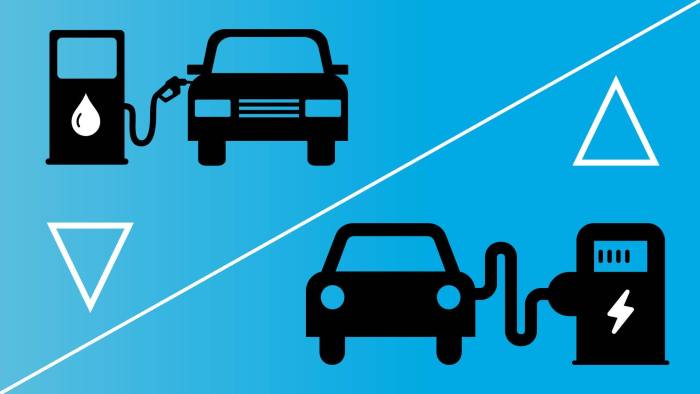
Most cars in use in the 2010s run on gasoline burnt in an internal combustion engine (ICE).Production of gasoline fuelled cars peaked in 2017. Hydrocarbon fossil fuels also burnt by deflagration (rather than detonation) in ICE cars include diesel, Autogas and CNG. Removal of fossil fuel subsidies, concerns about oil dependence, tightening environmental laws and restrictions on greenhouse gas emissions are propelling work on alternative power systems for cars. This includes hybrid vehicles, plug-in electric vehicles and hydrogen vehicles. 2.1 million light electric vehicles (of all types but mainly cars) were sold in 2018, over half in China: this was an increase of 64% on the previous year, giving a global total on the road of 5.4 million. Vehicles using alternative fuels such as ethanol flexible-fuel vehicles and natural gas vehicles are also gaining popularity in some countries. Cars for racing or speed records have sometimes employed jet or rocket engines, but these are impractical for common use.Oil consumption has increased rapidly in the 20th and 21st centuries because there are more cars; the 1985–2003 oil glut even fuelled the sales of low-economy vehicles in OECD countries. The BRIC countries are adding to this consumption.
2. Electric cars:
An alternative fuel vehicle is a vehicle that runs on a fuel other than traditional petroleum fuels (petrol or Diesel fuel); and also refers to any technology of powering an engine that does not involve solely petroleum (e.g. electric car, hybrid electric vehicles, solar powered). Because of a combination of factors, such as environmental concerns, high oil prices and the potential for peak oil, development of cleaner alternative fuels and advanced power systems for vehicles has become a high priority for many governments and vehicle manufacturers around the world.Hybrid electric vehicles such as the Toyota Prius are not actually alternative fuel vehicles, but through advanced technologies in the electric battery and motor/generator, they make a more efficient use of petroleum fuel. Other research and development efforts in alternative forms of power focus on developing all-electric and fuel cell vehicles, and even the stored energy of compressed air.An environmental analysis extends beyond just the operating efficiency and emissions. A life-cycle assessment of a vehicle’s involves production and post-use considerations. A cradle-to-cradle design is more important than a focus on a single factor such as the type of fuel.
Comparison of the two types
Electric Car (Mahindra e2o plus)
Mileage
120 kmEnergy Consumption
12 unitsEnergy Usage
12/120= 0.10 unitCost
Rs 7.30 per unit for 400-800 unitsCost per km
Rs 7.3 X 0.10 units= 0.73 paisaOne day expenditure (50 km average travel)
50 km X 0.73 paisa= Rs 36.50Monthly expenditure (25 days travel)
Rs 912.5Petrol Cars
Mileage
620 km (approx.)
Energy Consumption
40 litres (approx.)Energy Usage
3.125 litres per dayCost
Rs 82.25 per litreCost per km
Rs 5.140 per kilometreOne day expenditure (50 km average travel)
50 km X Rs 5.140 = Rs 257.03Monthly expenditure (25 days travel)
Rs 6,425Based on the calculations mentioned above, electric cars could save up to seven times the cost on average. However, the total expenditure on the electric vehicle, which includes the replacement cycle of the battery is high. Furthermore, electric vehicles plying on the road would mean thousands of charging stations need to be set-up, an infrastructure that is lacking as of now.
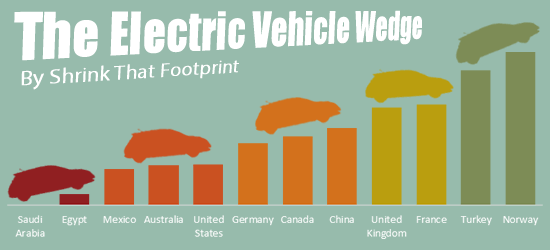
Nonetheless, these steps may still need to be taken as there is a need to reduce dependency on a fossil-fuel based economy as India’s crude oil imports for 2014 to 2015 was 112 billion dollars. Also, air quality indices suggest that automobile vehicular pollution has made several cities in India unhealthy.
The Government of Karnataka has approved Electric Vehicle and Energy Storage Policy in 2017, a trend that other state governments could follow.
 Site Title